The U.S. Industries Most Dependent On Immigrants

  • U.S. immigrant numbers shrank by 2 million between January 2025 and June 2025, a drop that affects many of the nation's industries reliant on immigrant labor.
  • Immigrants hold a particularly strong presence in management, professional, and related occupations, accounting for 35.4% of workers.
  • With more than 10,000 Baby Boomers retiring each day, fewer immigrant workers means tighter labor markets, slower production cycles, and higher national costs.
Global Migration

The U.S. Immigrantlandscape

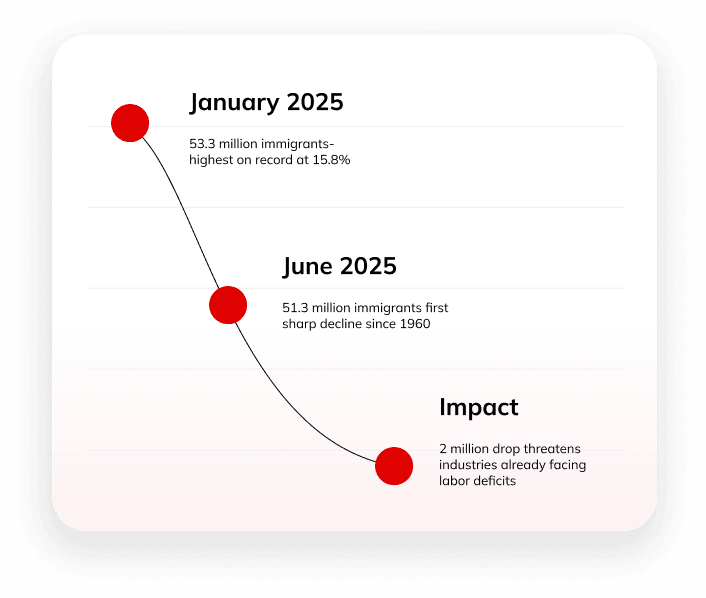
Pew Research Center data confirms the United States is home to the highest number of immigrants worldwide: an estimated 15.4%. In January 2025, that percentage reached 15.8%, the highest on record, with 53.3 million immigrants residing in the U.S. By June 2025, the number had rapidly shrunk to 51.3 million4the first sharp decline since 1960.

This study examines U.S. industries most dependent on immigrant labor, plus immigrant worker country of origin ratios, earnings, and labor shortages in light of mass deportations and severe ICE crackdowns.

15.8%

Peak immigration

Highest percentage on record in
January 2025

51.3M

Peak immigration

Immigrants residing in U.S. by
June 2025

Where U.S. Immigrants Come From

Recent study data highlights the extent to which the United States is a central global migration hub, featuring a large, diverse foreign- born population. Mexico is the single largest source of U.S. immigrants, representing 22% of the country's immigrants numbers substantial enough to outnumber the rest of the top five immigrant origin countries combined.
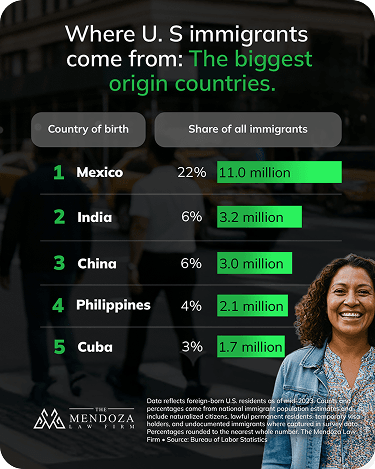
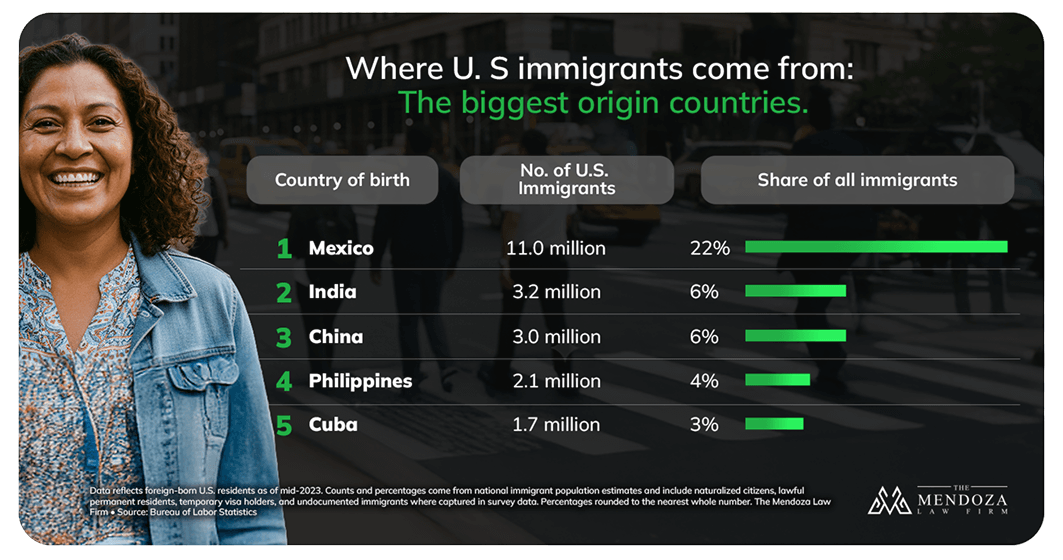
Where U.S. immigrants come from - The biggest origin countries

Combined, Latin American immigrants comprise a majority (52% of all foreign-born residents) totaling approximately 26.7 million people. These communities reflect a mix of long-term migration patterns with more recent immigrant surges driven by economic instability, political crises, and humanitarian exigencies.

Workforce Analysis

Immigrants in the Workforce

By examining the immigrant proportion of all major U.S. occupations, we see that immigrants hold a particularly strong presence in management, professional, and related occupations, accounting for 35.4% of workers. This underscores the key role immigrants play in high-skill, knowledge-driven fields such as healthcare, engineering, education, IT, and scientific research.

Management &
Professional

35%

foreign-born workers in high-skill, knowledge-driven fields

Service
Occupations

22%

foreign-born workers in food service, hospitality, personal care

Production &
Transportation

16%

foreign-born workers keeping supply chains functioning

Construction &
Maintenance

14%

foreign-born workers in infrastructure and skilled trades

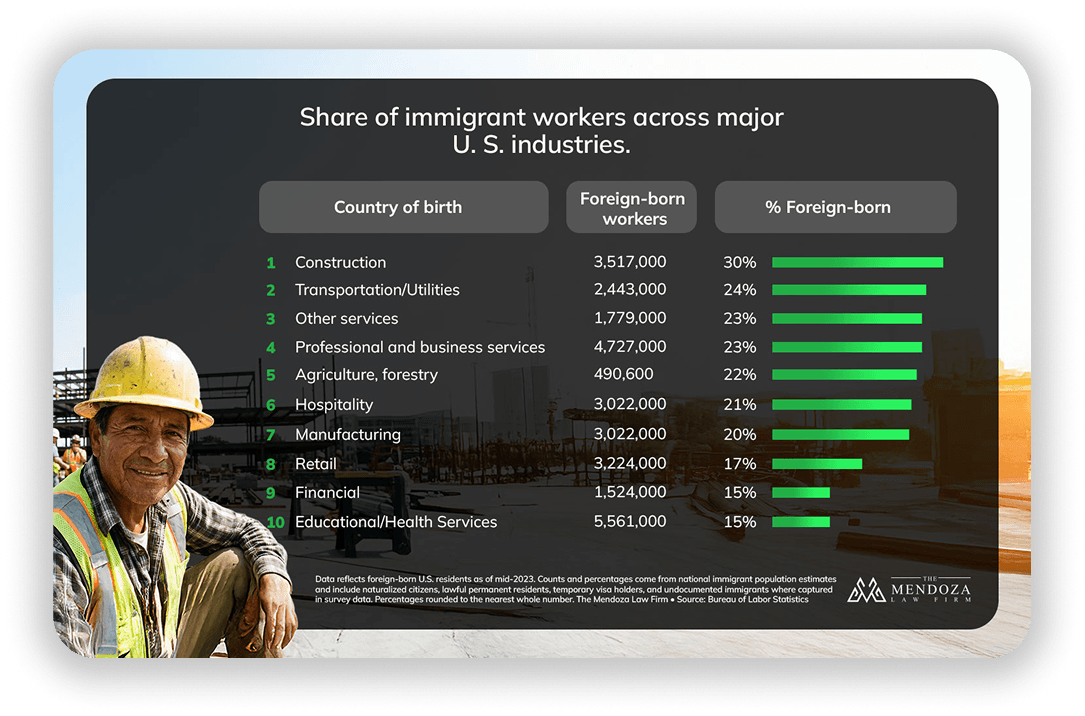
Industries Most Dependent on Immigrant Labor

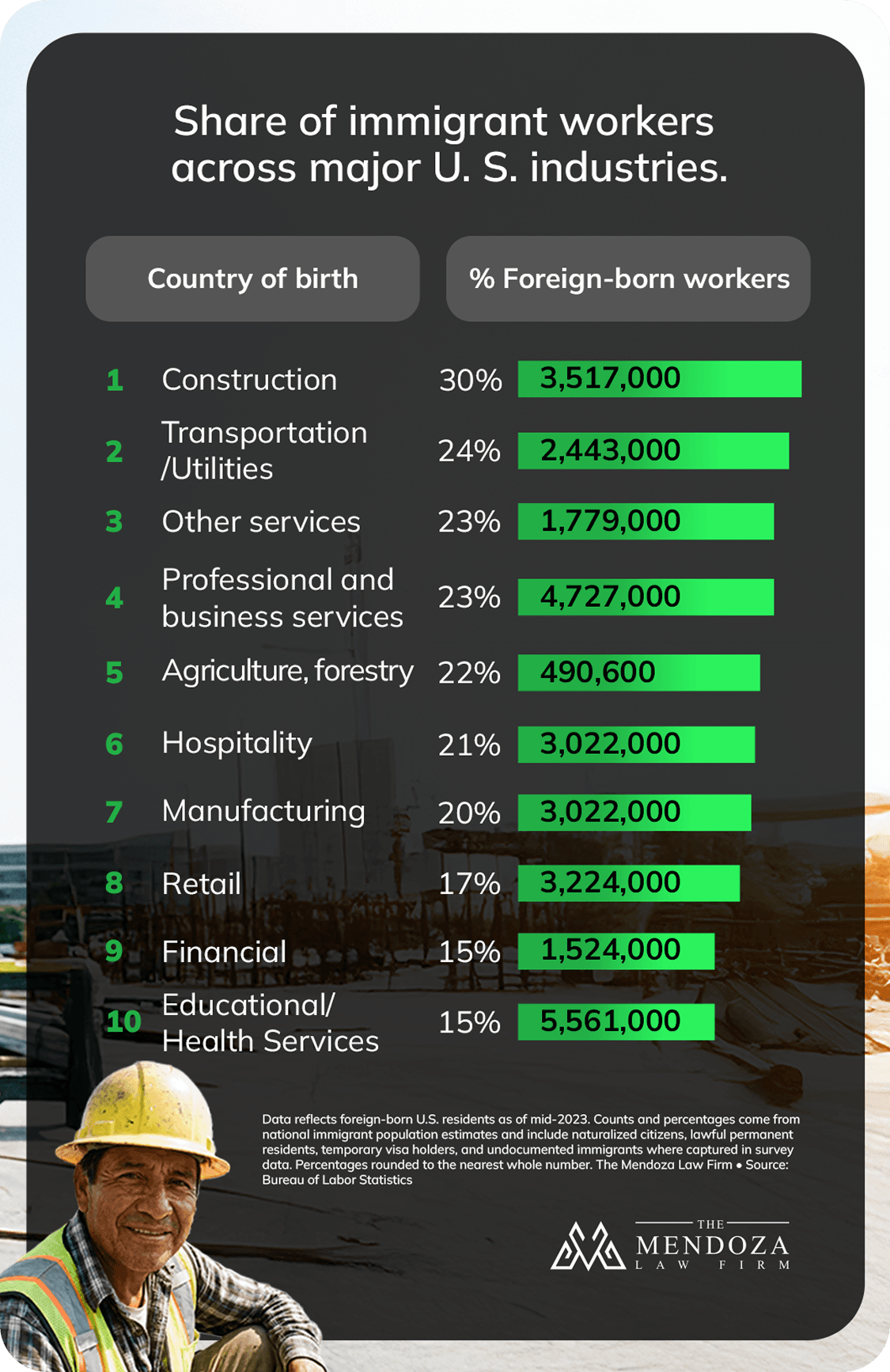
The distribution of foreign-born workers across U.S. industries highlights not only the roles immigrants fill, but also where they are key to economic stability and growth. Construction is the most immigrant-dependent sector in the country: nearly 30% of its workforce (over 3.5 million workers) were born outside the United States.

Industries Most Dependent on Immigrant Labor
Economic Impact

The Immigrant Weekly Earnings Shortfall

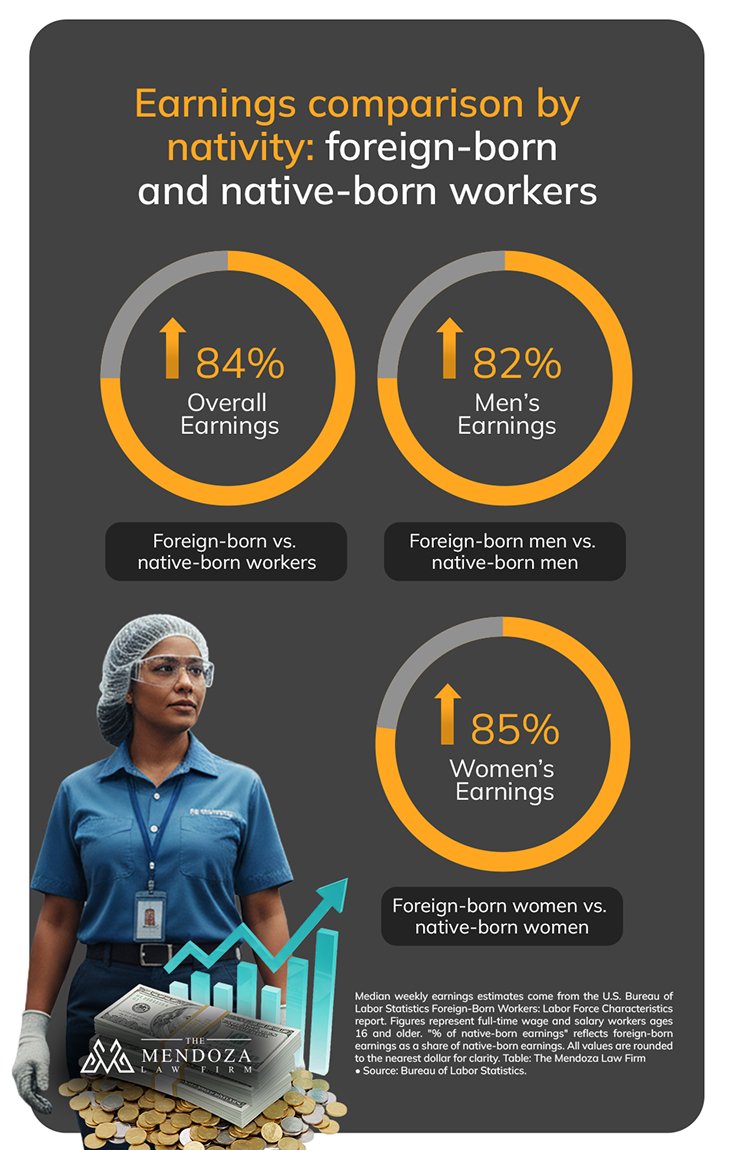
A comparison of median weekly earnings between foreign-born and native-born workers reveals a clear and persistent wage gap that cuts across both gender and occupational lines. Overall, foreign-born workers earn $1,001 per week, while native-born workers earn $1,190 meaning immigrants take home only 84% of the weekly pay their native-born counterparts earn.

Earnings comparison by nativity: foreign-born and native-born workers

Among men working full time, the wage disparity is even more pronounced, with foreign-born men earning $1,077, just 82% of native-born men's wages ($1,316). This suggests that foreign-born men are disproportionately consigned to physically demanding or lower-wage positions.

Declining Immigrant Numbers: A Critical Shift

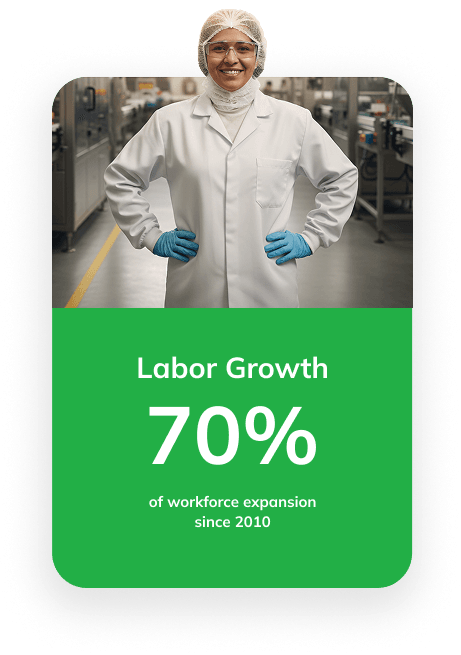
The sharp drop in the immigrant population between January and June 2025 marks the first notable decline in immigration numbers since the 1960s. This reversal is especially significant because immigrants have been the main source of labor force growth for over a decade. Research shows that over 70% of the country's labor-force expansion since 2010 is due to foreign-born workers.

January 2025:

53.3 million immigrants - highest on record at 15.8%

June 2025:

51.3 million immigrants first sharp decline since 1960

Impact:

2 million drop threatens industries already facing labor deficits

"With more than 10,000 Baby Boomers retiring each day, fewer immigrant workers directly translates into tighter labor markets, slower production cycles, and higher costs across the economy."

Risk Assessment

Labor Shortage Vulnerability by Industry

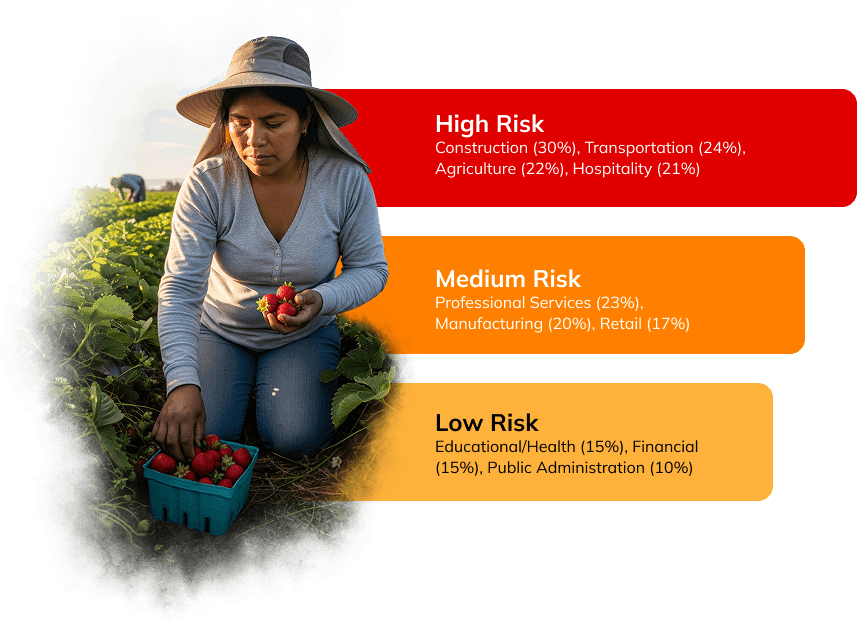
The risk assessment across U.S. industries clearly indicates that a decline in immigrant labor would disproportionately affect some work sectors. Industries with the highest concentrations of foreign-born workers face the greatest risk, as they already rely heavily on immigrant labor to meet day-to-day workforce demands.

High Risk

Construction (30%), Transportation (24%), Agriculture (22%), Hospitality (21%)

Medium Risk

Professional Services (23%), Manufacturing (20%), Retail (17%)

Low Risk

Educational/Health (15%), Financial (15%), Public Administration (10%)

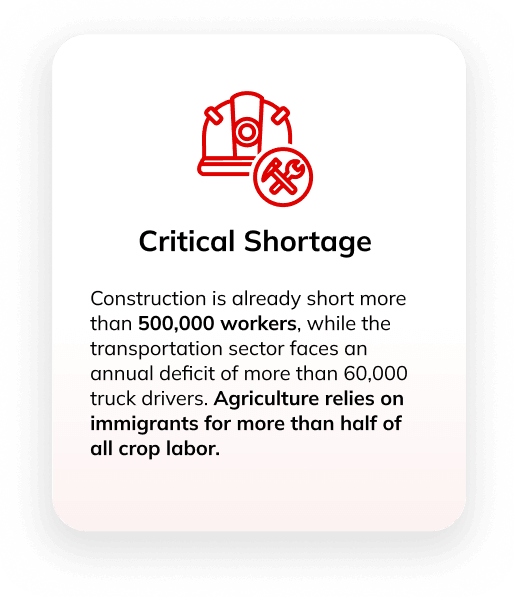
Critical Shortage - Construction and Transportation
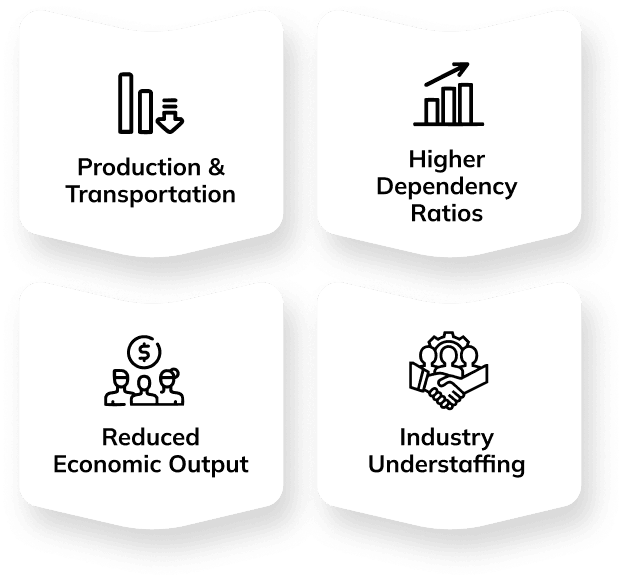
Long-term importance factors

The Long-Term
Importance of Immigrant Workers

Census Bureau models indicate that the native-born working-age population is expected to decline steadily through 2040, while the foreign-born population in the same age group will continue to grow. Without immigration, the U.S. workforce would have shrunk between 2010 and 2024, a period during which immigrants accounted for roughly 70375% of all labor-force growth.

Immigrant workers also contribute heavily to Social Security funding. The Social Security Administration reports that immigrants, both authorized and unauthorized, contributed more than $520 billion to Social Security during the last decade.

Immigrants Are Key to a Healthy U.S. Economy

The study makes it clear: the United States' economic strength is inextricably tied to immigrant labor. With immigrants representing 15.4% of the U.S. population and contributing more than 70% of all labor-force growth since 2010, they have become indispensable across every layer of the economy. Between January and June 2025, the foreign-born population fell by nearly 2 million people, marking the first major decline since the 1960s.

Infrastructure - 30% of construction workforce is foreign-born Labor Growth - 70% of workforce expansion since 2010 Social Security - $520B contributed in last decade

"Immigrants are not a disposable commodity. They are fundamental to a functioning U.S. economy, now and in the future."

Data Sources: U.S. Department of Labor, ICE, USA Facts, Pew Research Center, National Foundation for American Policy.

Immigrants make
America keep
working.

At The Mendoza Law Firm we provide proven immigration methods. We represent immigrants and families going through the relocation process to the United States. We have proudly represented countless successful cases. Get in touch with us today for further information and a full evaluation.

The Mendoza Law Firm - Successful immigration cases

You choose how to talk to us:

Direct Phone:

Call us for immediate attention and legal guidance.

877-MENDOZA abogada@mendozafirm.com

Office Hours:

Monday to Sunday: 8:00 a.m. - 10:00 p.m. (Eastern Time)

Our Offices:

6212 Gateway Blvd. East STA, El Paso, Texas 79905, USA.

601 Pennsylvania Avenue NW Building, Suite 900, Washington, D.C. 20004, USA