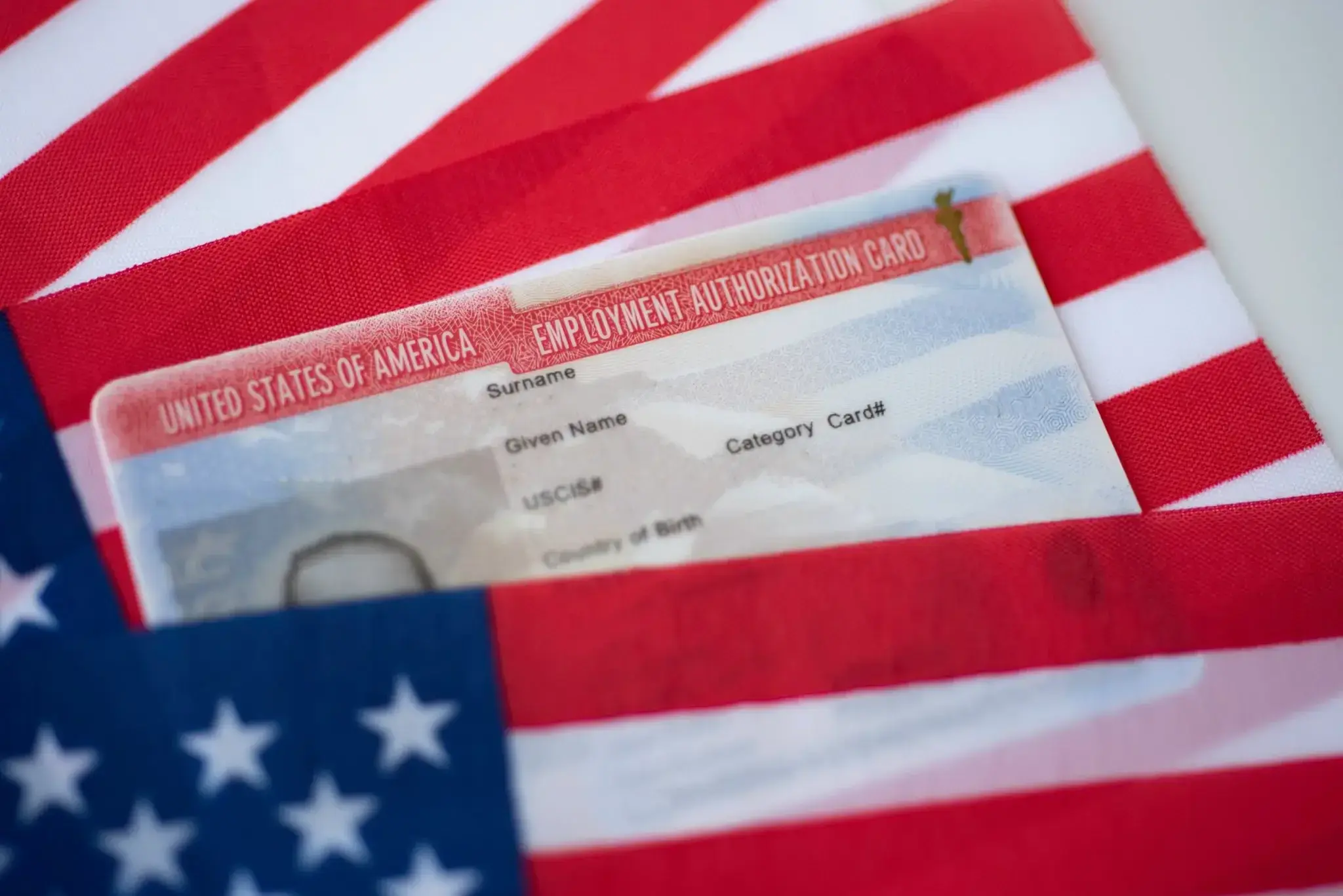
Having a work permit in the U.S. doesn’t just open doors to better jobs—it brings peace of mind, financial independence, and legal protection, especially while going through an immigration process.
Hi again, my people! I’m immigration attorney Maria Mendoza. And while every case is unique, today I’ll walk you through three common legal ways to get a work permit. Whether you’re just starting your immigration journey or waiting on a decision from USCIS, this information can help you take the next step with clarity and confidence.
Did You Know?
In 2024, U.S. Citizenship and Immigration Services (USCIS) issued over 2.3 million Employment Authorization Documents (EADs)—a big increase from previous years, mostly due to the rise in humanitarian and family-based applications.
[Source: USCIS FY2024 Data Summary]
For a free case evaluation, call +1 (202) 933-3379
Through a Pending Humanitarian Visa Application (VAWA, U Visa, or T Visa)
Many people who have experienced domestic violence, human trafficking, or other serious crimes in the United States may qualify for humanitarian visas that offer protection. At certain stages of the process, these legal options also allow them to apply for a work permit.
Here’s how it works for each visa:
-
VAWA (Violence Against Women Act)
VAWA Visa protects close family members—like spouses, parents, or children—who have suffered abuse from a U.S. citizen or lawful permanent resident.
Once USCIS issues a Prima Facie Determination (a notice showing the application appears to meet basic eligibility), you can apply for a work permit using Form I-765. This doesn’t mean your case is approved yet, but it does open the door to legal work authorization during the process.

-
Click to contact our immigration lawyers today
U Visa (for victims of certain serious crimes)
This visa is designed for individuals who have been victims of serious crimes recognized by USCIS—such as assault with a firearm, kidnapping, extortion, sexual abuse, among others—and who have cooperated or are willing to cooperate with law enforcement in the investigation or prosecution of the crime.
Regarding the work permit, applicants may request it once USCIS issues a Bona Fide Determination letter. This letter confirms that the agency has reviewed the application, found it complete and credible, and determined that it was submitted in good faith.
-
Complete a Free Case Evaluation form now
T Visa (for victims of human trafficking)
Since August 28, 2024, USCIS has allowed individuals applying for a T Visa to include a request for a work permit, as long as their case meets the basic eligibility criteria. To confirm this, USCIS conducts a preliminary review and, if the application is considered valid, issues a Bona Fide Determination (BFD) letter.
This marks a significant change: now, applicants can not only receive a work permit while their T Visa is still pending, but they also gain protection from deportation through deferred action, without needing to wait for a final decision on their case.
More info here: Have a deportation order? The T Visa and Bona Fide Determination could change your path.
Estimated Wait Times for Work Permits via Humanitarian Visas
Although it is currently difficult to determine how long USCIS takes to process an application—due to the high volume of cases and stricter review standards—here is a comparison of estimated approval times:
| Type of Visa | When is the Work Permit Available | Estimated Wait Time (2025) |
|---|---|---|
| VAWA Visa | After Prima Facie Notice | 3–8 months |
| U Visa | After Bona Fide Determination | 12–24 months |
| T Visa | After Bona Fide Determination | 6–12 months |
Through Adjustment of Status Based on a Family Petition
Another common path to obtaining a work permit is through a family-based petition (Form I-130), officially known as the Petition for Alien Relative.
A U.S. citizen or lawful permanent resident can file this form for their spouse, child, or parent to establish a qualifying family relationship. But approval of Form I-130 alone does not grant a work permit—it’s only the first step.
When can you apply for the work permit?
Once the I-130 is approved, the beneficiary can submit Form I-485 to adjust their status to a lawful permanent resident (Green Card). At that point, they can also apply for a work permit while their Green Card application is pending.
Who qualifies for this route?
-
Spouses and minor children of U.S. citizens or lawful permanent residents
-
Parents of U.S. citizens (age 21 or older)
-
Individuals with legal entry or those eligible for a provisional waiver (Form I-601A) due to previous unlawful presence
Watch this video for more info: Who Can I Petition with Form I-130?
The estimated timeline for receiving a work permit through a family petition is 6 to 8 months after filing, depending on case details and USCIS processing volume. But remember—every case is different.

Through an Employment-Based Petition or Work Visa
Some individuals may qualify for a work permit through an employment petition (Form I-140) or by applying for a temporary work visa.
This option is more complex and requires an employer to meet specific criteria. However, in some cases, it allows obtaining a work permit while waiting for permanent residency or a change of status.
Who qualifies?
-
Skilled workers and professionals (EB-2 or EB-3 visa categories)
-
Individuals with extraordinary abilities in arts, sciences, education, business, or athletics
-
Religious workers, researchers, professors, or investors under certain visa types
In these cases, the work permit is usually part of a larger visa application. If all requirements are met, the estimated wait time is 4 to 8 months, depending on visa type, processing center, and whether it’s filed with an adjustment of status.
Why Is Having a Work Permit So Important?
More than just a document, a work permit is a legal tool that provides stability, protection, and real opportunities while you’re in the middle of your immigration journey. Here’s what it allows you to do:
-
Work legally with full labor rights
-
Protection from exploitative employers
-
Open a bank account and build credit
-
Apply for a driver’s license
-
Prove you’re in an active legal process—helpful even in deportation defense
Check out my client’s story: I Got My Work Permit and Social Security Number in the U.S.!
Need to Apply for a Work Permit?
If you or someone you know needs a work permit, remember—not everyone qualifies automatically. It’s crucial to understand what legal category you’re applying under. Choosing the wrong basis or filing with errors can lead to delays or even denials.
With over 15 years of experience in immigration law, our team at The Mendoza Law Firm helps people just like you apply for work permits safely, correctly, and strategically. We’ll help you find the right legal path, avoid costly mistakes, and build a strong application.
Book your free evaluation today and take the first step toward the stability and job opportunities you deserve.
¡La lucha sigue!
Call or text +1 (202) 933-3379 or complete a Free Case Evaluation form