
One of the elements that can cause the most trouble with immigration law is unlawful entries and exits.
In consults with attorneys, there are immigrants who mention having decades of struggling to regularize migratory status, which can be related to certain types of unlawful entries and exits. Now, how does the law work in terms of unlawful entries and exits, and how to regularize migratory status without leaving the US despite having unlawful entries and exits?
Another element that can cause problems with immigration law is the permanent bar. If one has one year of unlawful presence after April 1st of 1997, this year of unlawful presence either by linear or segmented permanence, could imply being under the permanent bar.
For instance, one may have entered the US in 1995 and have stayed in the country until 2002; or may have entered, stayed for five months, left, and got back for another eight months, accumulating one year of unlawful presence.
Leaving the US with one year of unlawful presence to, later on, re-enter unlawfully might imply falling under the permanent bar.
How does the permanent bar work, and which ways are there to regularize migratory status despite this bar?

One option might be through a family petition. The detail with this option is that one must leave the US and wait ten years out of the country before having the opportunity of asking for pardon, which, generally, is the pardo i-212.
There are immigrants who are in a situation in which they count with a US citizen or Legal Resident spouse, or with an over-21 US citizen son/daughter; and wonder how, even after paying their taxes, having good moral character, not having problems with immigration law, and having a US citizen spouse or an over-21 US citizen son/daughter; is possible that they have so much time struggling to regularize their migratory status.
If looking for a way to regularize migratory status through a family petition, or I-130 petition, it must be considered that, in reality, there is no way to do it.
This is, sometimes, the reason for which it gets to be heard of family members or relatives who were able to attend their interview at Ciudad Juarez in order to request the pardon, and their case was denied with ten years bar. This can happen due to being under the permanent bar and having exited the US.
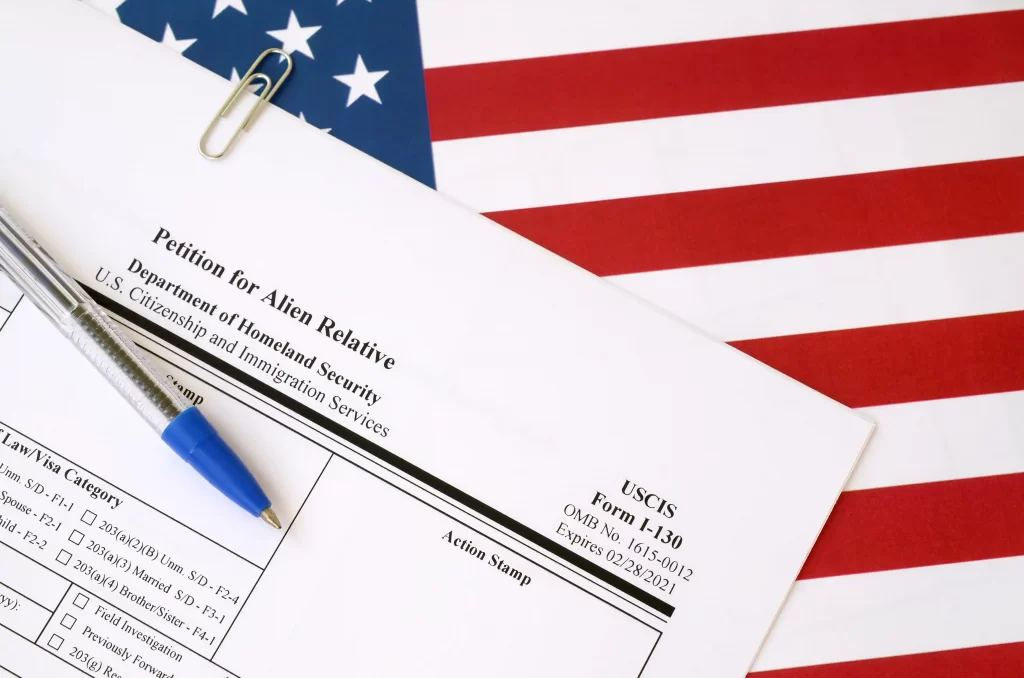
The I-130 petition tends to not provide any solution when in front of the misfortune of being under the permanent bar. This doesn’t mean there exists no way to regularize migratory status, even without leaving the US, sometimes even obtaining a work permit during the time the case is being processed.
There are certain ways through which is possible to regularize migratory status within de US, and the reason why so much emphasis on not exiting the country is because, if having several unlawful entries and exits, another exit could imply an additional bar of ten years.
There exists solutions for those who, unluckily, are in an open deportation case with immigration courts. These solutions might be hard to come up with, implying difficulty to succeed in a case too, but not impossible.
Those people who have an asylum application have high chances of success, just as those cases carried out through what is known as The Ten Years Law.
The Ten Years Law consists of, if having ten years within the US and a US citizen or Legal Resident son/daughter, spouse or parent who can suffer extreme difficulties if the immigrant can’t remain within the country, migratory status can be fixed. Despite it can be hard to succeed in these cases, it can be a way.
Among the possible ways to regularize migratory status even under the permanent bar are the humanitarian visas.
For a free case evaluation, call +1 (202) 933-3379
Humanitarian Visas

The humanitarian visas, which are three, the U Visa, the T Visa, and the VAWA Visa, besides other benefits they provide, despite being under the permanent bar, having entries and exits, or an unlawful entry after a deportation order; they can provide a way to regularize migratory status without leaving the US.
The way to overcome the permanent bar can be to meet the requirements of one of the humanitarian visas.
Not all cases will meet the requirements of any of the humanitarian visas. That’s why it’s important to consult with an immigration attorney. Furthermore, if meeting the requirements of any of the humanitarian visas, either for the T Visa, the U Visa, or the VAWA Visa, there can be a way to regularize migratory status without leaving the US.
Humanitarian visas have different requirements, reason for which not all cases qualify.
Click to contact our immigration lawyers today
U Visa
The U Visa is for those who were hurt in the US as result of being victim of some crime, and help the police or the government with information about that specific crime.
Complete a Free Case Evaluation form now
VAWA Visa
The VAWA Visa is for those who suffered certain ways of family abuse or mistreatment from a US citizen or Legal Resident spouse or ex-spouse (with a time window of no more than two years from the divorce date); or from an over-21 US citizen son/daughter. It’s worth mentioning that the VAWA Visa process is completely confidential.
This humanitarian visa provides a migratory status with which a work permit, a social security number, and protection against deportation can be obtained, as long as there is good moral character.
There are those who are afraid of prejudicing their spouse or son/daughter if applying for a VAWA Visa, reason why they restrict themselves from starting a process; however, the VAWA visa is a process that doesn’t require a police report. Again, it’s a confidential process; to the point that the law punishes with a penalty fee of $5,000 USD those immigration officers who provide information about these types of cases.
T Visa
The T Visa is for those who were victims of labor mistreatment, either by coyotes, their couple, or their employer. The person must had been forced to perform some sort of work.
For instance, in the case of coyotes; the immigrant could had been taken to a warehouse, hadn’t been allowed to leave, had been forced to clean or cook under threats, mistreats, and even rapes

This last scenario can happen when a woman enters with the help of coyotes, arrives in the US, and is kept captive working for them while is raped or being abused. In the case of men, there can be hits, including or not firearms; death threats, and coercion to keep them working.
The T Visa applies in the context of domestic violence too. If a couple hits or rapes his spouse, has her, frightened, as a slave working at home for him, takes her without her contentment to certain places to perform some sort of work while she is not receiving any salary or payment for her job, and is under threats of her couple.
Equally, the T Visa can apply when an employer is not paying fully and on time the work for which hired the immigrant, either by paying incompletely, threatening the immigrant to accuse him/her before the Immigration Department or the police, threatening to go against the health or integrity of the immigrant, or his/her family.
It’s recommended to talk with an immigration attorney, and if having unlawful entries and exits, not to lose hope and continue looking for a way to regularize migratory status.
Call or text +1 (202) 933-3379 or complete a Free Case Evaluation form