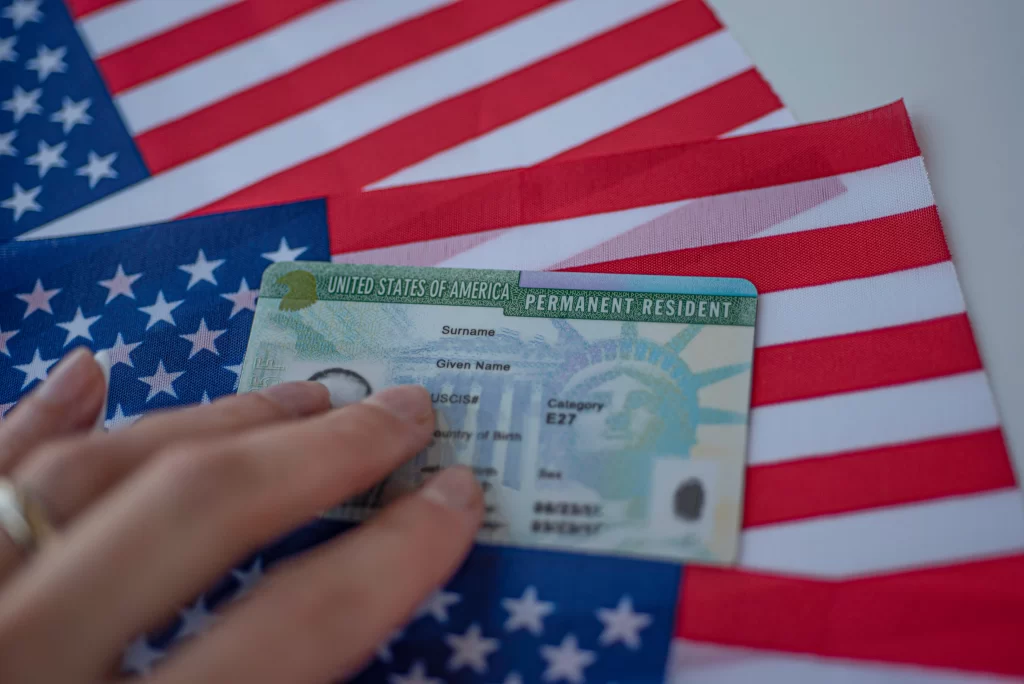
There are parents who move to the US having the American Dream; reaching legal residence or citizenship and buying a house to have a good life in the US.
Some choose to wait until their children reach 21 years to submit an application that will allow them to regularize their status as immigrants.
Regularizing migratory status through an over-21-year-old US citizen son/daughter might not be that easy.
Ways in which a parent can regularize migratory status through a son/daughter

The process may not be complicated if entered the US lawfully, either with a tourist visa or another type of visa.
When entering the US lawfully with a visa and passport, it’s generally not too hard to regularize migratory status. An employment authorization can be reached within 8 months, and the Residence in about a year, by having the whole process carried out within the US. This is in the case of those who entered lawfully.
The situation can become harder for those who entered unlawfully, mainly if they are under the Permanent Bar.
Those who have falsely declared to be US citizens after September 30th of 1996 can be under the permanent bar.
For a free case evaluation, call +1 (202) 933-3379
There are three ways to regularize migratory status basing the process in an over-21 US citizen son/daughter.
Through 245i law.
This method applies to those who have a petition filed before April 30th of 2001.
If any family member filed a petition in the past, it’s a good practice to verify the date on which the petition was filed, since if it was before April 30th of 2001, and not being under permanent bar, there might be a way to regularize migratory status without leaving the US.
Trough a son/daughter who is or was in the US Army.

There is a law called Parole in place which applies to those who have a son/daughter or spouse who is or was in the US Army.
If entered the country unlawfully, and wone of your sons/daughters or spouse is or was in the US Army, there might be a way to regularize migratory status without leaving the US.
Through I-601A pardon
This is the pardon for which, those who come from Mexico, must leave the US to have an interview at Ciudad Juarez consulate in order to obtain residence.
It is important, when contemplating this pardon, to consult with an immigration attorney, since, when exiting the US, there is the risk for the case to be denied while out of the country. This procedure is not based in having an over-21 US citizen son/daughter.
If applying for pardon through an over-21 US citizen son/daughter is not possible, he/she could submit a petition.
To get the pardon, it must be demonstrated to have a US citizen or Legal Resident spouse or parent who will suffer extreme difficulties if not being able to stay in the country.
What to do if not having a US citizen son or spouse who is or was in the US Army, neither 245i law protection, nor a US citizen or legal resident spouse or parent who can help to get the pardon, or if being under permanent bar?
In these cases, the only way to regularize migratory status might be through a self-petition for a humanitarian visa: the VAWA visa.
VAWA visa, one of the humanitarian visas, is a noble visa in the sense that it can forgive things that other migratory procedures can’t, and can provide a way to reach Permanent Residence despite having previous deportations or unlawful entries.
One of the main requirements to apply for the VAWA visa is demonstrating having suffered mistreatment or abuse from an over-21 US citizen son/daughter.
Note that VAWA is a confidential process. There are those who, even though having all the requirements for the VAWA visa, opt to not start a process due to being afraid of harming the son/daughter or provoking him/her a bad file.
Due to being a confidential procedure, the law imposes penalty fees of $5,000 USD to those immigration officers who provide information about this type of case.
For which, if having suffered family mistreatment or abuse from a US citizen son, there is nothing to worry about in terms of how can this affect the son/daughter in question, since there will be no affectation at all.
Click to contact our immigration lawyers today
Mistreatment and family abuse

When talking about mistreatment and family abuse, the first thought to come to mind might be physical damage or extreme domestic violence. Even though under the law mistreatment and abuse can include physical damage and extreme domestic violence, it doesn’t necessarily have to be that way. The law in the US also contemplates verbal, psychological, and emotional mistreatment.
With these other mistreatment forms, and looking at the whole behavior of the son/daughter in which the process is based after having reached 21, USCIS can come to the conclusion that, in fact, mistreatment from that son/daughter was suffered. Either in an extreme way or not, migratory status in the US can be regularized without leaving the country.
These situations can be reached due to problems with the son/daughter, either involving alcohol, drugs, caused by the son/daughter’s emotional problems or the dangerous people he/she is spending time with.
Even though the son/daughter being involved doesn’t represent abuse per se, it can bring the opportunity to problems that do.
For instance, if the son/daughter gets home high on drugs, threatens by demanding money, throws hits, insults, or humiliations, and is something that happens continually, that is when mistreatment may arise.
It is recommended to consult with an immigration attorney to know which is the best strategy given a specific case.
Call or text +1 (202) 933-3379 or complete a Free Case Evaluation form